Cloud AI & Big Data
1. what is Cloud AI & Big Data?

Cloud AI & Big Dataare transformative technologies that work together to unlock new possibilities for businesses and organizations across various sectors. Cloud AI refers to the use of artificial intelligence (AI) models and tools hosted on cloud platforms, such as Google Cloud, AWS, and Microsoft Azure, to process and analyze data. By leveraging the power of the cloud, companies can access high-performance AI capabilities without needing to maintain costly on-premises infrastructure. Cloud AI provides a range of services, from machine learning and deep learning to natural language processing and computer vision. This enables businesses to integrate sophisticated AI-driven features into their applications, such as chatbots, personalized recommendations, predictive analytics, and automated decision-making, all while benefiting from the cloud's scalability and flexibility. Cloud AI allows organizations to scale their AI applications quickly, improving efficiency, reducing costs, and enabling faster innovation.
On the other hand, Big Data refers to vast amounts of data generated at high velocity from various sources, including social media, business transactions, IoT devices, and sensors. The sheer volume, variety, and speed of data generated in today’s digital world require specialized tools and technologies to process and analyze it. Traditional data storage and processing systems are often inadequate to handle the scale and complexity of Big Data. Cloud platforms provide the necessary infrastructure to store, manage, and analyze massive datasets, offering technologies like Hadoop, Spark, and NoSQL databases that make it easier for organizations to work with Big Data. Businesses can gain insights from structured, semi-structured, and unstructured data, enabling better decision-making, enhanced customer experiences, and more efficient operations. Big Data analytics allows organizations to identify trends, uncover hidden patterns, and make data-driven predictions, which can lead to increased competitiveness and growth.
The real power of Cloud AI and Big Data emerges when they are combined. The cloud’s flexibility and scalability, paired with AI’s capabilities, allow businesses to process and analyze vast datasets in real-time to uncover insights that were previously difficult to obtain. Cloud-based AI models can be trained on massive amounts of data, improving the accuracy of predictions and decision-making. This combination enables organizations to respond quickly to changes, optimize processes, and enhance customer experiences. For instance, in healthcare, Big Data can be used to gather patient data from multiple sources, and AI models can analyze this data to predict health trends or suggest treatment options. In retail, Big Data can track customer preferences, and Cloud AI can use that data to offer personalized recommendations, driving sales. This integration of Cloud AI and Big Data is becoming increasingly essential for companies seeking to innovate, stay competitive, and leverage the full potential of their data to drive business growth.
2.AI-powered Cloud Solutions
AI-powered Cloud Solutionsrepresent the integration of Artificial Intelligence (AI) technologies with cloud computing platforms to create scalable, intelligent, and efficient systems that can automate processes, analyze data, and make decisions. These solutions leverage the power of the cloud to provide on-demand access to advanced AI tools and services, making it easier for businesses to adopt AI without the need for significant investment in infrastructure or specialized expertise. Leading cloud providers like Amazon Web Services (AWS), Microsoft Azure, and Google Cloud offer a wide range of AI-powered services, including machine learning (ML), natural language processing (NLP), computer vision, and predictive analytics. By using cloud-based AI solutions, organizations can speed up their AI adoption, scale their operations, and tap into innovative technologies without having to build complex systems in-house.
One of the main advantages of AI-powered Cloud Solutions is their scalability and flexibility. With traditional on-premise AI solutions, scaling up often involves significant hardware investments and complex infrastructure changes. In contrast, AI-powered cloud solutions provide virtually unlimited computing power and storage capacity, which can be adjusted as needed. This allows businesses to scale their AI applications quickly and efficiently, ensuring they can handle large datasets and high-demand workloads. For example, an e-commerce platform can use cloud AI to predict customer behavior in real-time and adjust product recommendations dynamically. The cloud's elasticity also enables businesses to experiment and iterate with AI models faster, as they can provision and deploy resources instantly, minimizing the risk of over-provisioning or under-utilization.
AI-powered cloud solutions also enhance automation and decision-making capabilities. For instance, cloud AI tools can process and analyze vast amounts of data in real-time, providing organizations with insights and actionable recommendations to improve business outcomes. With AI-driven chatbots, companies can offer personalized customer service 24/7, automating routine inquiries and freeing up human agents for more complex tasks. In the field of predictive analytics, businesses can leverage AI to forecast demand, optimize supply chains, and detect anomalies, allowing for better strategic planning and operational efficiency. Furthermore, cloud AI enables organizations to integrate AI capabilities into existing applications easily. Whether it's for customer relationship management (CRM), finance, healthcare, or marketing, AI-powered cloud solutions allow companies to enhance their processes with intelligent, data-driven insights, all while benefiting from the cloud's inherent advantages of cost-efficiency, accessibility, and scalability.

3. Cloud-based Machine Learning
Cloud-based Machine Learning
refers to the practice of using cloud platforms to develop, train, deploy, and scale machine learning models. By leveraging cloud computing, businesses and data scientists can access powerful infrastructure and machine learning tools without needing to manage on-premises hardware or deal with the complexity of setting up their own systems. Cloud providers such as Amazon Web Services (AWS), Google Cloud Platform (GCP), and Microsoft Azure offer specialized services for ML, such as Amazon SageMaker, Google AI Platform, and Azure Machine Learning, which provide a range of features, including pre-built models, data storage, model training, deployment, and scaling solutions. These platforms significantly reduce the time and cost associated with implementing machine learning, enabling organizations to focus more on building innovative solutions and less on managing the infrastructure.
One of the primary advantages of cloud-based machine learning is the scalability it offers. Cloud platforms provide virtually unlimited compute resources, making it possible to train complex models with massive datasets. For example, deep learning models that require immense computational power for training can be scaled easily using cloud resources like Graphics Processing Units (GPUs) or Tensor Processing Units (TPUs), which accelerate processing speed. With cloud-based ML, businesses don’t have to worry about managing the hardware or optimizing the infrastructure to meet the demand of large-scale machine learning tasks. Additionally, cloud platforms offer the flexibility to only pay for the resources used, reducing overhead costs while offering scalable performance, which is particularly beneficial for projects that may require different levels of computational power at various stages of model development.
Another significant benefit of cloud-based machine learning is its ability to integrate with other cloud services and tools. Cloud ML platforms are often part of a broader cloud ecosystem that includes data storage, analytics, and security services, allowing businesses to seamlessly manage the entire machine learning lifecycle. For instance, data can be easily imported from cloud-based databases (like Amazon S3 or Google Cloud Storage), cleaned and processed using cloud-based data analytics tools, and then used to train machine learning models. Once the model is trained, it can be deployed on the cloud for real-time predictions or batch processing. Additionally, cloud-based platforms often offer automated ML features, such as AutoML, which simplify the process of model development, allowing even users with limited machine learning expertise to build and deploy effective models. This makes it easier for businesses of all sizes to adopt AI and ML technologies without needing a deep understanding of complex algorithms or computational infrastructure.
4.Data Lakes vs Data Warehouses
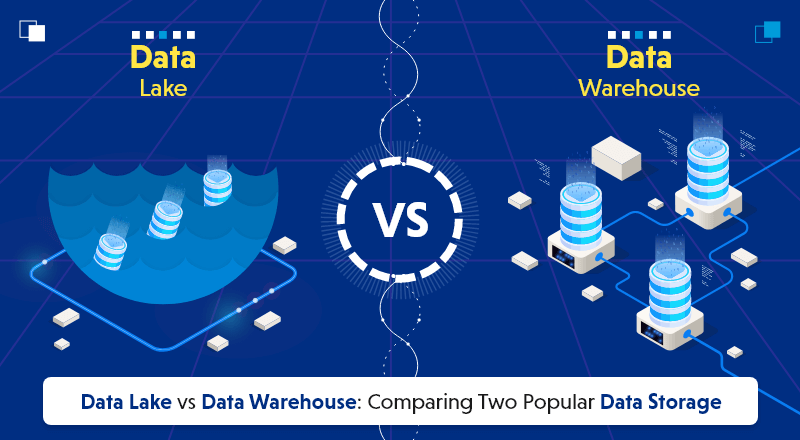
Data Lakes vs Data Warehouses
serve different but complementary roles in data management, and understanding their distinctions can help businesses choose the right approach for their needs. A Data Lake is designed to handle massive amounts of data in its raw, unstructured, semi-structured, or structured form. The primary advantage of a data lake is its flexibility. It allows companies to store data without worrying about transforming it into a specific format upfront. This is especially useful for organizations that want to collect diverse data types such as logs, images, videos, sensor data, and more. By storing data in its original format, a data lake enables advanced analytics, machine learning, and data science projects to thrive. These types of environments support big data applications and allow data scientists to perform deep explorations and derive insights from complex data sets. Technologies like Hadoop, Amazon S3, and Azure Data Lake provide the foundation for creating data lakes, offering the scalability and cost-effectiveness needed to store vast quantities of raw data.
On the other hand, Data Warehouses focus on providing structured and processed data that is organized for fast querying and reporting. Unlike data lakes, data warehouses rely on data that has been cleaned, transformed, and structured before being stored. This structured approach makes them ideal for business intelligence (BI), analytics, and reporting purposes where speed and reliability are paramount. Data warehouses typically use an Extract, Transform, Load (ETL) process to ensure that the data is of high quality, consistent, and ready for analytical queries. For example, in a data warehouse, customer sales data might be aggregated by region and product category, making it easy for business analysts to run quick reports or perform trend analysis. Data warehouses like Amazon Redshift, Google BigQuery, and Microsoft Azure Synapse are optimized for performance, providing businesses with the ability to generate fast insights from large volumes of processed data, making them crucial for daily business operations and strategic decision-making.
While both systems have their unique advantages, many modern organizations choose to use both Data Lakes and Data Warehouses in tandem, creating a hybrid data architecture. This approach allows businesses to take advantage of the strengths of each system. Data lakes offer the flexibility and scalability to handle large, diverse datasets that require exploration and advanced analytics, while data warehouses provide the speed and structure necessary for reliable business intelligence and decision-making. In a hybrid setup, raw data can be ingested into a data lake for further processing, and once it’s cleaned and structured, it can be moved into a data warehouse for fast, optimized reporting. This integration of data lakes and warehouses enables organizations to leverage the full potential of their data, supporting both operational efficiency and strategic insights.
5.Big Data Processing in Cloud
Big Data Processing in Cloud
refers to the use of cloud computing platforms to store, manage, and analyze vast volumes of data generated at high velocity, variety, and volume. With the rapid growth of data in today’s digital age, traditional on-premises infrastructure struggles to keep up with the demands of processing, storing, and analyzing big data. Cloud platforms such as Amazon Web Services (AWS), Google Cloud Platform (GCP), and Microsoft Azure provide scalable, flexible, and cost-effective solutions for processing large datasets. These cloud services offer the necessary compute power, storage, and advanced analytics tools that allow organizations to efficiently process and derive insights from big data without the need for maintaining expensive, complex on-premises infrastructure. Cloud-based big data processing tools, such as Apache Hadoop, Apache Spark, and Google BigQuery, enable companies to handle data at scale, perform real-time analytics, and process data using distributed computing, which enhances performance and reduces costs.
One of the key advantages of big data processing in the cloud is scalability. Traditional infrastructure often requires significant investment in hardware and capacity planning, which can lead to inefficiencies and resource wastage. Cloud platforms, on the other hand, offer elasticity, meaning businesses can scale their infrastructure up or down based on real-time needs, ensuring they only pay for what they use. For example, organizations can leverage cloud resources like Elastic MapReduce (EMR) in AWS or Google Dataproc to spin up clusters of machines to process large datasets and then shut them down when no longer needed. This flexibility enables businesses to efficiently manage costs while handling unpredictable workloads or fluctuating data volumes. Additionally, the cloud provides virtually unlimited storage capacity, making it ideal for storing large, unstructured datasets in data lakes, such as Amazon S3 or Azure Data Lake Storage, without worrying about storage limitations.
Cloud-based big data processing also facilitates advanced analytics and machine learning (ML) by providing access to a wide array of tools and services that integrate seamlessly with large datasets. For instance, cloud platforms offer managed ML services like AWS SageMaker, Google AI Platform, and Azure Machine Learning that allow data scientists to build, train, and deploy machine learning models at scale. With big data processing in the cloud, organizations can analyze data faster and gain insights in real time. Real-time analytics tools like Apache Kafka or Google Cloud Dataflow allow businesses to analyze streaming data and make instant decisions, such as detecting fraud in financial transactions or analyzing user behavior on websites. The cloud’s flexibility and ability to support both batch and stream processing workflows make it easier for businesses to adopt a range of big data processing techniques and apply them to real-time applications, improving operational efficiency and driving innovation.

6.AI as a Service (AIaaS)
AI as a Service (AIaaS)
is a cloud-based service that provides ready-to-use artificial intelligence tools and platforms to businesses and developers without requiring them to have specialized knowledge in AI or invest in expensive infrastructure. AIaaS offers a wide range of machine learning, deep learning, natural language processing (NLP), and computer vision capabilities that can be easily accessed through cloud platforms. Major cloud providers like Amazon Web Services (AWS), Google Cloud Platform (GCP), and Microsoft Azure offer AIaaS, providing businesses with scalable, on-demand AI services. With AIaaS, organizations can implement AI-driven applications, automate tasks, and gain insights from their data without needing to build complex AI systems from scratch. This significantly reduces the time, cost, and expertise required to integrate AI into business operations.
One of the main advantages of AI as a Service is its accessibility. Small and medium-sized businesses, as well as large enterprises, can easily access powerful AI tools without having to invest heavily in infrastructure or AI development teams. AIaaS platforms often provide pre-built models for tasks such as image recognition, speech-to-text conversion, chatbots, predictive analytics, and recommendation systems. For example, AWS AI Services offer tools like Amazon Rekognition for image and video analysis, Amazon Polly for text-to-speech conversion, and Amazon Lex for building conversational interfaces. These tools are ready to use and can be integrated into applications with minimal setup, allowing businesses to quickly deploy AI capabilities and enhance their products or services. This democratization of AI helps level the playing field for businesses of all sizes, enabling them to leverage AI without deep technical expertise.
Another benefit of AIaaS is scalability and flexibility. AIaaS platforms are hosted in the cloud, meaning businesses can scale their usage up or down based on demand without the need for costly infrastructure upgrades. For instance, if a company needs to process a large dataset for machine learning or wants to run a computationally intensive deep learning model, AIaaS can automatically allocate the necessary resources. This flexibility allows businesses to experiment with AI applications, test various models, and pay only for the computing power and storage they actually use. Additionally, AIaaS platforms often come with built-in security, performance optimization, and support, making it easier for businesses to implement AI solutions in a secure and efficient manner. This removes many of the technical hurdles associated with developing AI systems in-house, allowing organizations to focus on using AI to drive innovation, improve customer experiences, and optimize business processes.
.webp)
7.Cloud-based Predictive Analytics
Cloud-based Predictive Analytics
refers to the use of cloud computing platforms to analyze historical data and make predictions about future events or trends. By leveraging the power of cloud infrastructure, businesses can access advanced tools and algorithms that help them forecast outcomes, identify patterns, and make data-driven decisions. Predictive analytics in the cloud integrates various data sources, machine learning models, and statistical techniques to predict future behaviors, sales, customer preferences, and other key business metrics. The cloud provides the necessary computing power, storage, and scalability to handle vast amounts of data, making predictive analytics more accessible and cost-effective for organizations of all sizes.
One of the key advantages of cloud-based predictive analytics is scalability. Cloud platforms like Amazon Web Services (AWS), Google Cloud Platform (GCP), and Microsoft Azure offer elastic resources that can be adjusted depending on the size and complexity of the data being processed. Organizations can scale their predictive analytics efforts as needed, allowing them to handle increasing data volumes without the need for significant infrastructure investments. The cloud’s on-demand nature means businesses only pay for what they use, making it a cost-effective solution for running machine learning models, data processing, and storing large datasets required for predictive analytics. Cloud-based predictive analytics also enables businesses to integrate data from multiple sources, including internal databases, external APIs, and real-time data streams, providing a comprehensive view for more accurate predictions.
In addition to scalability and cost efficiency, cloud-based predictive analytics allows businesses to quickly implement machine learning models and algorithms without the need for specialized hardware or software. Many cloud platforms provide pre-built machine learning services, such as AWS SageMaker, Google AI Platform, and Azure Machine Learning, which enable organizations to build, train, and deploy predictive models with minimal effort. These platforms offer a range of tools for data preprocessing, feature engineering, model training, and evaluation, enabling companies to apply predictive analytics to a variety of use cases, from customer behavior forecasting to demand planning and fraud detection. Furthermore, cloud-based predictive analytics allows for continuous updates and improvements to models, ensuring that predictions stay relevant as new data becomes available.

8.Cloud Data Management
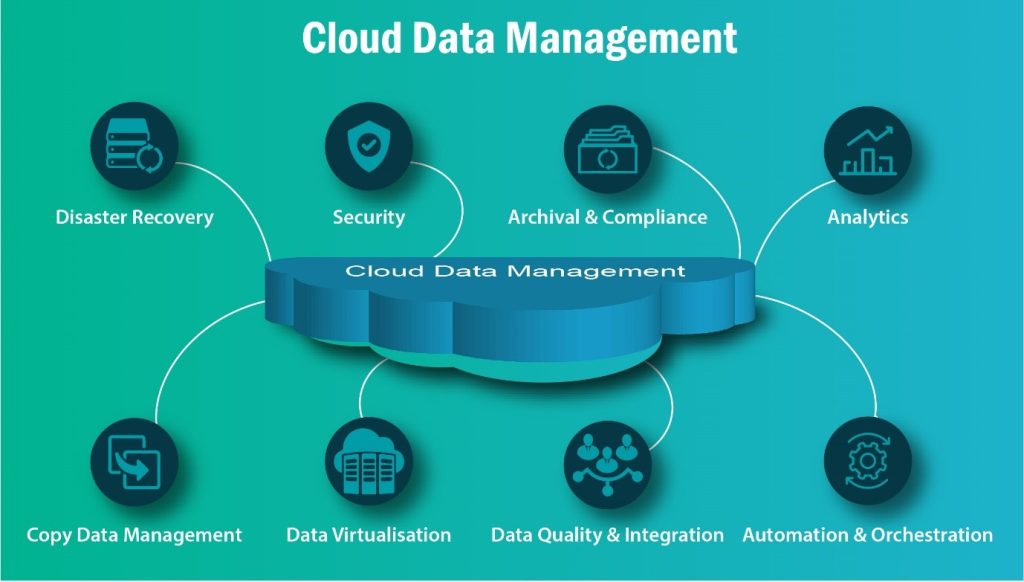
Cloud Data Managementrefers to the processes, policies, and technologies used to manage and store data in cloud environments. It involves the efficient handling of data storage, retrieval, security, backup, and maintenance within cloud platforms like Amazon Web Services (AWS), Google Cloud Platform (GCP), and Microsoft Azure. As businesses increasingly migrate to the cloud, managing data effectively becomes crucial to ensure that it is stored securely, remains accessible, and is compliant with regulations. Cloud data management includes everything from organizing data across distributed environments to implementing data governance, security, and analytics in the cloud. This approach allows businesses to leverage cloud infrastructure to store vast amounts of data while maintaining flexibility, scalability, and reliability in their data operations.
One of the primary benefits of cloud data management is scalability. Unlike traditional on-premises solutions, cloud platforms provide virtually unlimited storage space, enabling businesses to scale their data management needs as they grow. Whether the data is structured or unstructured, cloud environments can accommodate large datasets, ranging from simple customer records to complex machine data, logs, and media files. Moreover, cloud data management tools often come with automated data-tiering, which helps move data between different storage tiers based on usage patterns. This optimization ensures that businesses only pay for the storage they need, while also maintaining fast access to frequently used data and offloading less critical data to more cost-effective storage options.
In addition to scalability, cloud data management emphasizes robust security and compliance. With increasing concerns about data breaches and privacy violations, cloud providers offer a wide array of security measures, including encryption, access control, multi-factor authentication, and backup solutions to protect sensitive data. Cloud data management tools enable businesses to enforce data governance policies, ensuring that data is compliant with regulations such as GDPR, HIPAA, or CCPA. For example, cloud platforms offer tools that allow companies to define who can access specific datasets, track data usage, and generate audit logs to monitor activities. Furthermore, cloud providers ensure the availability and reliability of data through redundant systems and disaster recovery plans, so businesses can quickly recover from outages or data loss incidents, minimizing downtime and preventing data loss.
Comments